
Milly, Our Milk Snake
Milly is our wonderful Milk Snake. Milk snakes are constricting snakes that are primarily classified as terrestrial snakes (ground, rather than tree dweller), they prefer to hide amongst the leaf litter. Milk snakes, however, are good swimmers and climbers, so need enrichment that allows climbing. Milly loves to explore her enclosure, can be very active, and use her branches and platforms.
Milk snakes are primarily nocturnal with some crepuscular (dawn and dusk) activity and will therefore on occasion, access some natural sunlight.
Milly came to live with us in 2018 when she was approximately 13 years old as an unwanted snake. Most Milk Snakes are gentle but can be harder to look after so not recommended for beginners, they are excellent escape artists!
Milly is senior snake and has struggled with handling, she remains with us and cared for but is off limits for client handling. We keep a close eye on her and give her the best stress-free a life as possible.
Scientific Name: Lampropeltis triangulum hondurensis
Class: Reptile
Origin: Primarily native to the USA – Honduras, Nicaragua, and Northeastern Costa Rica
Diet: Obligate carnivores, meaning they need to eat the whole animal in order to get the right nutrition. Milk snakes in the wild would eat a wide range of foods, including small lizards, a variety of rodents mice, gerbils, hamster, other small snakes, birds and lizard eggs.
Lifespan: Milk snakes in their natural habitat typically live between 10 to 15 years which is influenced by numerous factors including predation, disease, availability of food, and environmental conditions.
In captivity and with proper care, milk snakes can have a significantly longer lifespan, often reaching 20 to 25 years or even more.
Interesting Fact: The name “Milk Snake” comes from an old myth. Farmers once believed these snakes would sneak into barns to drink milk from cows. This is, of course, untrue; they were more likely in barns hunting for rodents.
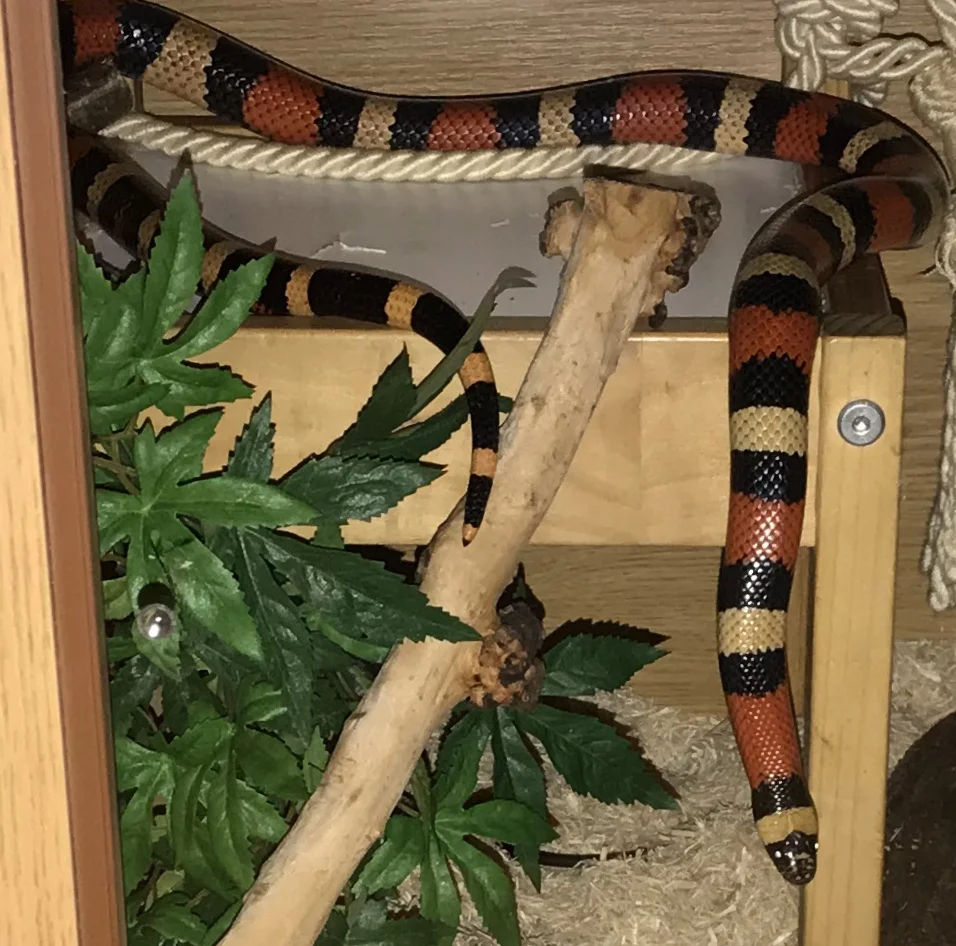
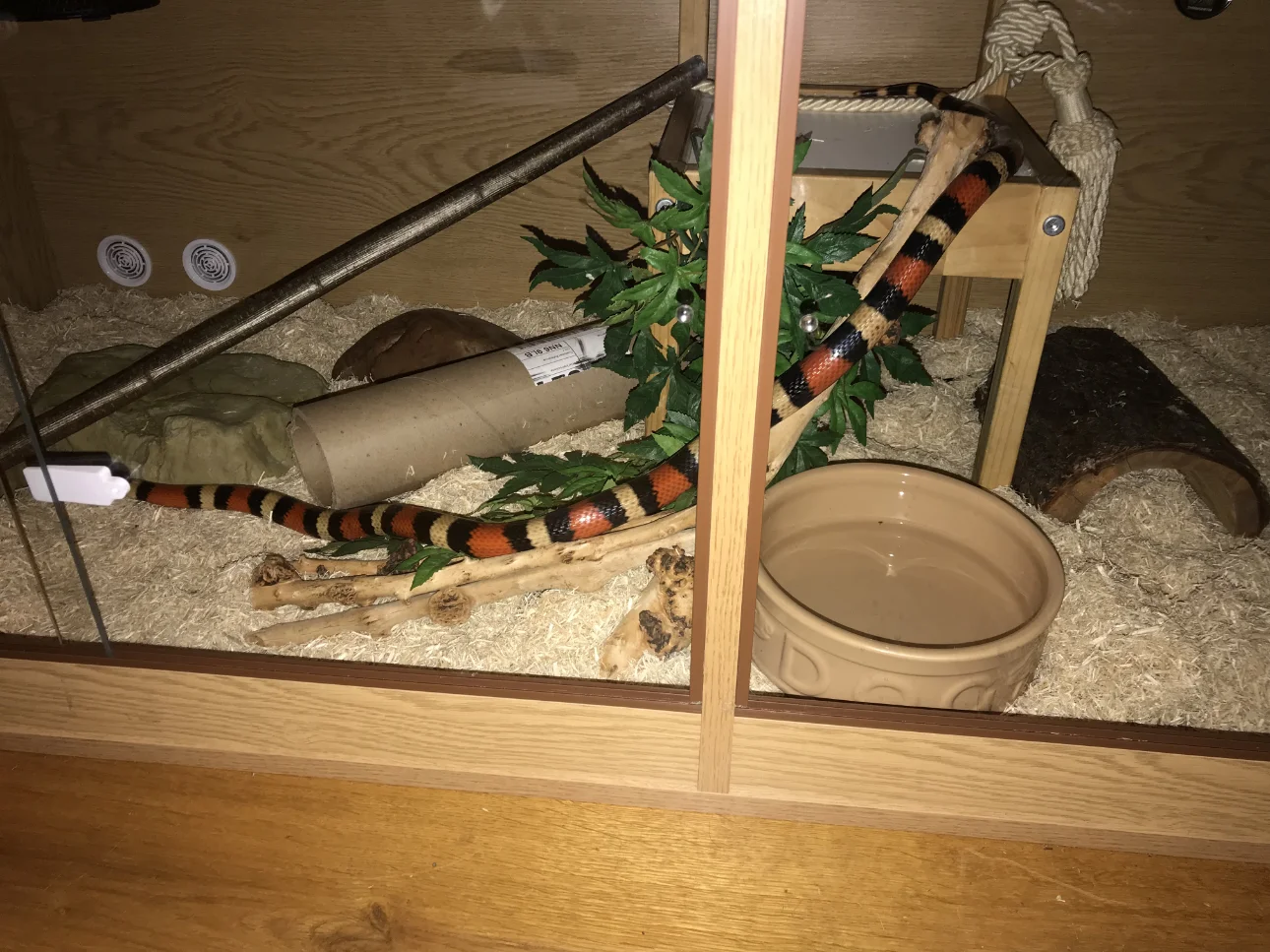


escape artists
Milk Snakes are known for being adept escape artists.
They can squeeze through very small openings, which makes secure enclosures essential in captivity. Their ability to climb, combined with their strength, means that even the smallest oversight can lead to an escape!

The conservation status of milk snakes generally varies by species, but most are not considered to be at significant risk.
Milk Snakes are widespread and abundant, and there are no major threats known to significantly impact their population.