
Indian Star Tortoises
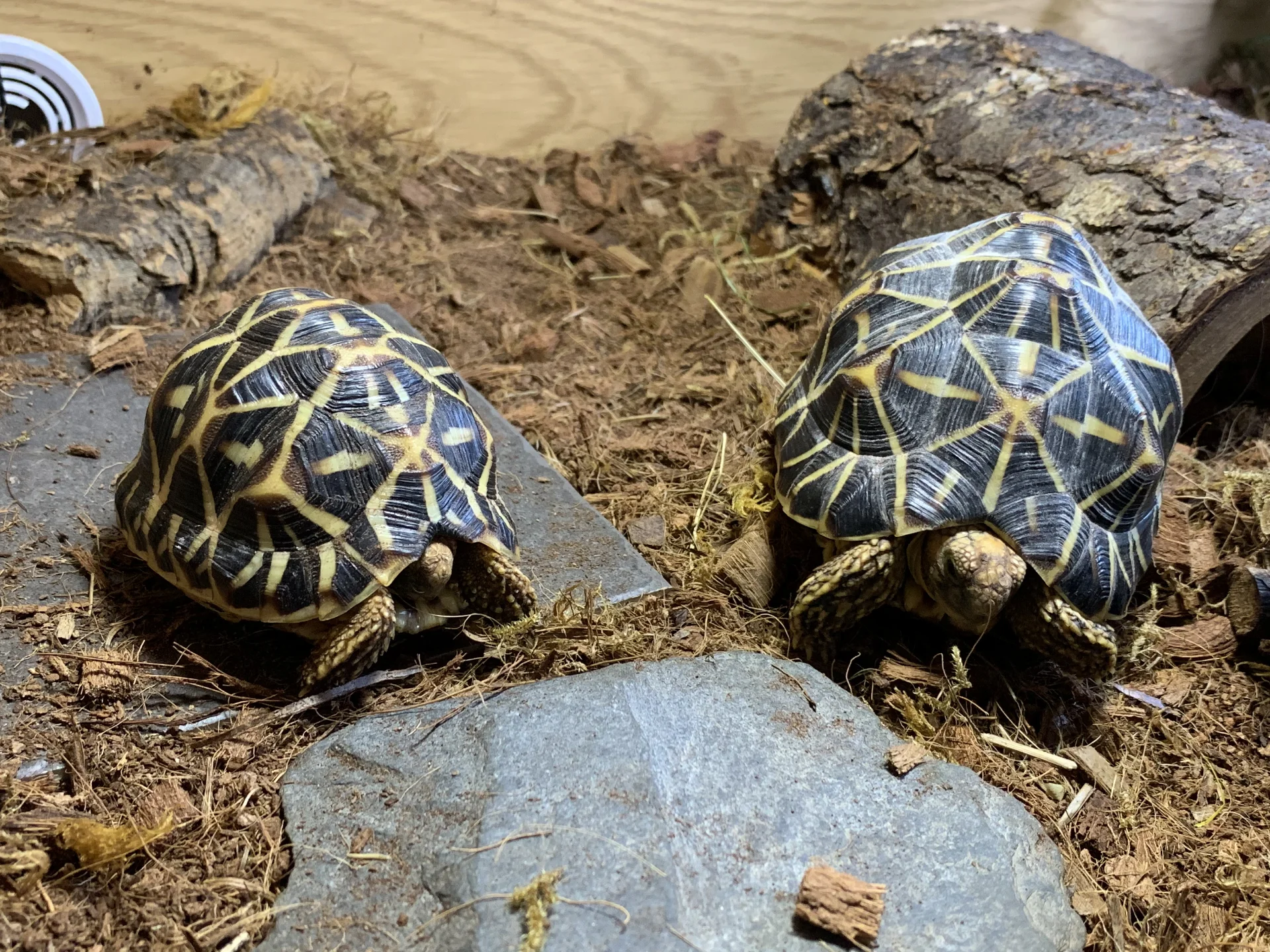
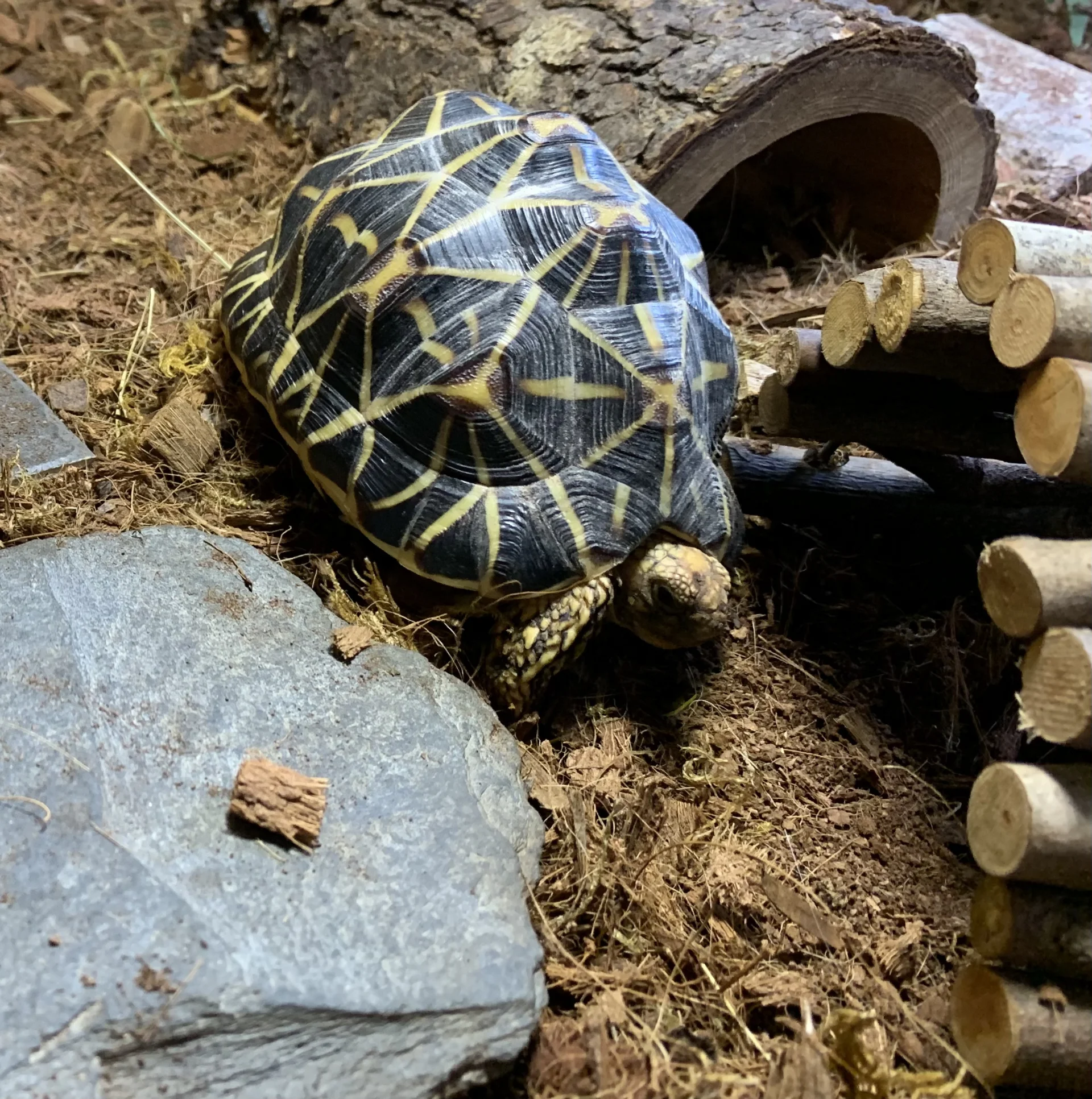
Elvis & Prescilla are our stunning Indian Star Tortoises. They can be shy, but with time and patience they are fine with handling, but would not like to be handled a lot, which we respect. Elvis and Prescilla are diurnal (day time active) and are most active during early morning and mid-afternoon. They like to hide away in the peak of the day (and heat) to sleep.
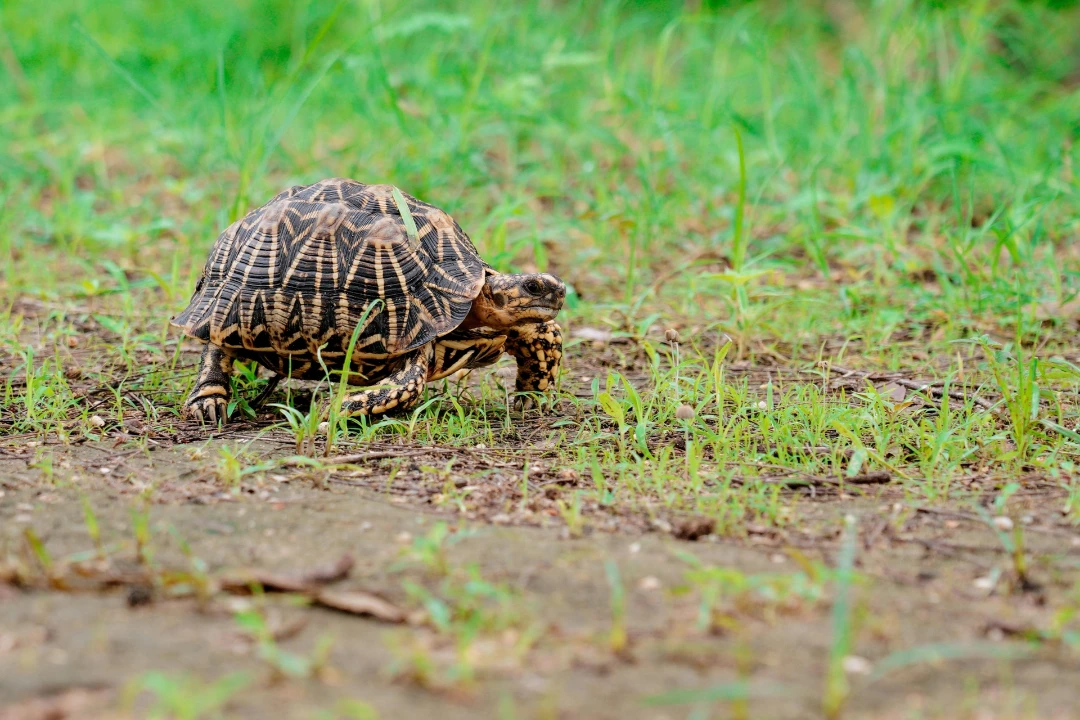
This species is renowned for its distinctive shell (carapace), which showcases a pattern of radiating yellow or white lines on a black background, creating a star-like appearance.
This species of tortoise are small to medium-sized, with adults typically reaching lengths of up to 15 inches. Their shells are high-domed, offering protection and giving them a somewhat spherical silhouette.
Despite their appeal, they face significant threats from habitat loss and the pet trade, leading to their classification as a vulnerable species by conservationists. In their natural environment, they play a role in seed dispersal, contributing to the ecological balance of their habitats.
Scientific Name:
Geochelone elegans
Class: Reptile
Origin: They come from dry regions of India, Pakistan, and Sri Lanka
Diet: Herbivore, feeding on a variety of grasses, fruits, and vegetables.
Lifespan: Typically around 30-55 years in the wild but in captivity, they have been known to live up to 80 years old!
Interesting Fact: Male tortoises can be significantly smaller than females as can those from Sri-Lanka. Whereas those from mainland India tend to be on the larger size.

Who needs sleep anyway?
The Indian star tortoise is a species of tortoise that doesn’t need to hibernate.
However, they do slow down a bit when its really cold or too hot, but they are still active and going about their day!

Indian Star Tortoise Geochelone elegans has most recently been assessed for The IUCN Red List of Threatened Species in 2018.
The Indian star tortoise is classified as “Vulnerable” by the IUCN due to habitat loss from urbanisation and agriculture, rampant poaching for the exotic pet trade, use in traditional medicine and rituals, road mortality, and habitat fragmentation.
Its attractive star-patterned shell makes it highly sought after, leading to significant illegal trade. The slow reproductive rate of the tortoise further compound the challenges to their survival, making conservation efforts critical.