The Betta Tank – Mr Blue Sky
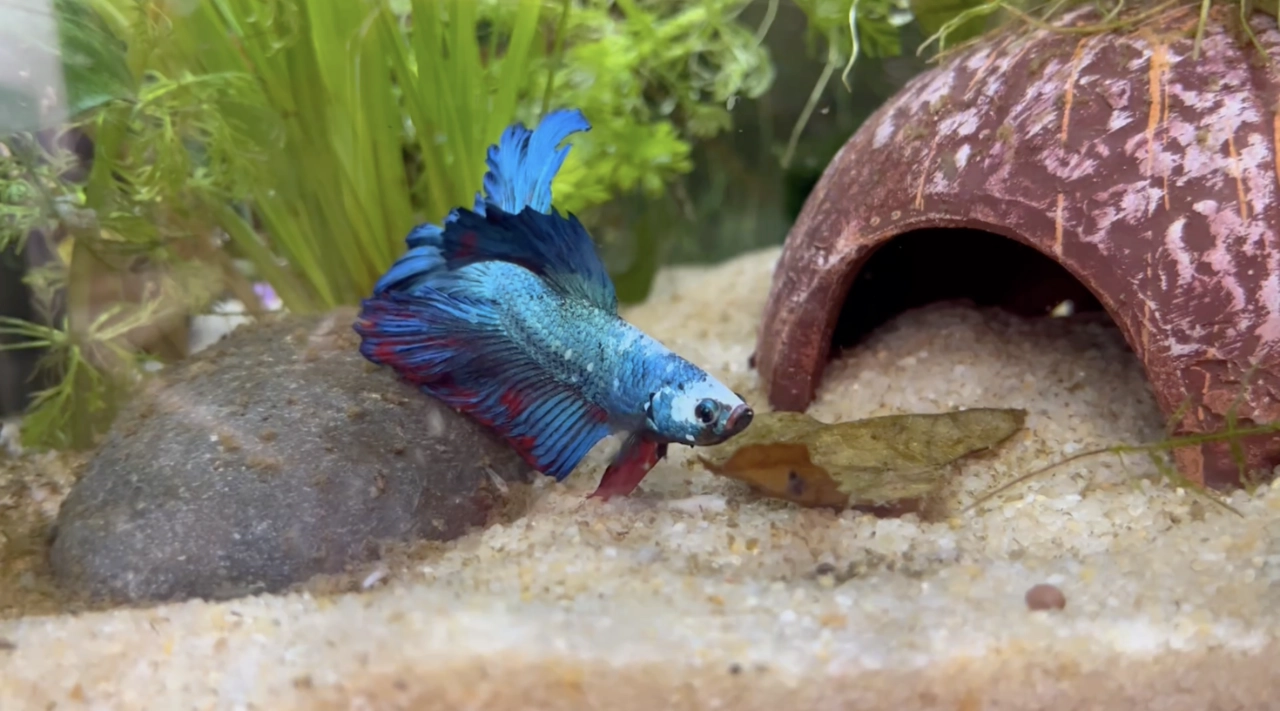
The betta tank is home to our betta fish, or Siamese fighting fish (Betta splendens), a vibrant, freshwater species native to Southeast Asia.
| Name | Mr Blue Sky |
| Common Names | Betta Fish Siamese fighting fish |
| Scientific Name | Betta splendens |
| Colourings | Multi-coloured Half Moon |
| Date of Birth (Approx.) | February 2025 |
| Gender | Male |
| Country of Origin | Thailand View on Google Earth |
| Habitat | Fresh water rice paddies, stagnant ponds and slow moving streams. |
| Average Life Span | Approximately 3-7 Years |
| Interesting Facts | They were recognised in 1782 by King Rama 1 of Thailand in the ‘three seal code’, where they were used for betting purposes. (although later this was thankfully banned). King Ramm 111 (1824 – 1851) brought the fish into international recognition, when he gifted some to Theodore Cantor; a Danish Zoologist, who was the first Western scientist to describe the species. The Betta is now Thailand’s national aquatic animal! |

The betta fish (Betta splendens), or Pla Kat, is listed as Vulnerable on the IUCN Red List due to threats to its wild populations in Southeast Asia, particularly in Thailand. Habitat loss from wetland drainage for agriculture, urbanisation, and pollution from pesticides and runoff are primary concerns. Overcollection for the aquarium trade and competition from invasive species further endanger wild bettas. While captive breeding meets most commercial demand, the species’ restricted natural range and ongoing environmental degradation heighten its vulnerability, necessitating conservation efforts to protect its remaining habitats.
Information & Care
In the wild, Betta fish would be found in shallow paddy fields and slow moving shallow streams. These would naturally warm up very quickly and as such Blue needs to have these conditions replicated in his tank, with a low flow water filtration system and a heater to keep his tank in line with his needs as a tropical fish from Thailand.
Betta fish are tropical, fresh water fish that grow to approximately 5-7.5 cm (2-3 inches). In the wild they would live in acres of rice fields, yet are sold as needing extremely small tanks, or even a drinking glass (we obviously don’t agree).
Betta fish have what is known as a labyrinth organ, this allows them to breathe air from the surface (a very useful survival tool, if you live in shallow water). For this reason, the fish tank always has some space at the top and has floating plants and areas for the Betta to rest at the surface to breathe air.
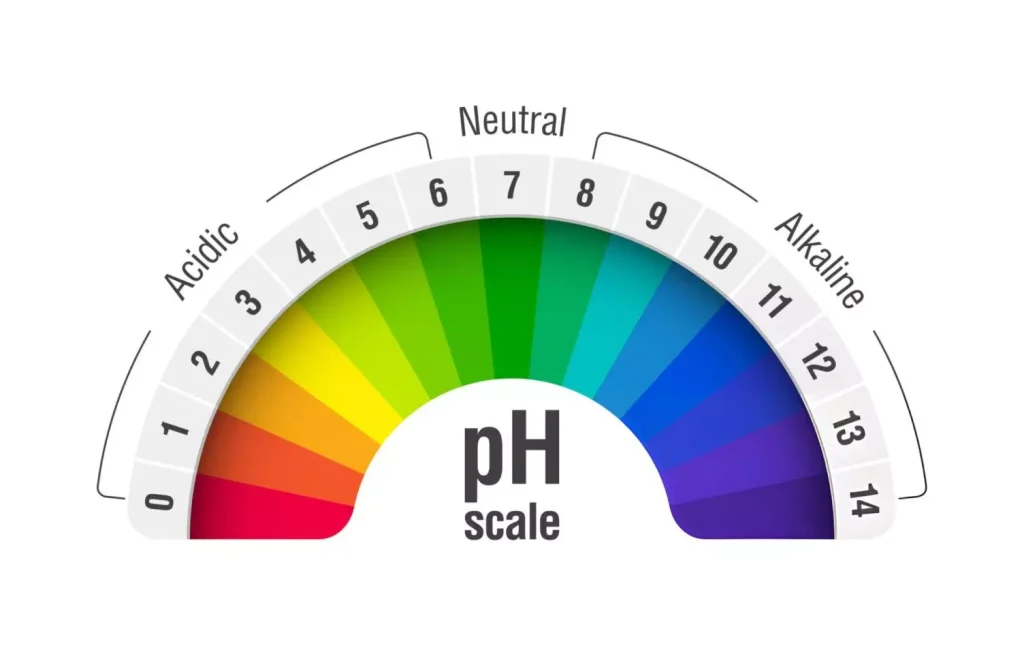
Betta fish prefer warm, slightly acidic water with a pH of 6.5-7.0
Betta fish can be highly aggressive, so we have not introduced any tank mates to share his home.
– Brine shrimp
– Mysis shrimp
– Daphnia – good for bloat
– Mosquito larvae
– Tubifex worms
– Blood worms – 1x/week max
One or two Atison’s Betta Pellets are provided just once or twice a week (maximum), as dry food is not generally good for fish.
Over-feeding any aquatic species can result in increases in harmful bacteria and ammonia, and will result in higher levels of tank maintenance and water changes, so it is important to avoid the temptation to keep treating / feeding our aquatic friends.
Our Betta Fish Tank
Our 64 litre Betta tank measures 61cm W x 38cm D x 45cmH. It is important that the tank is longer than higher to aid the Betta fish in breathing, resting and feeding at the water surface.
The tank has a low flow filtration system, a thermostatically controlled tank heater, and a Seachem ammonia alert disc. The substrate is sand over a soilscape planting medium with lots of live plants to help him feel safe and to help with the essential nitrogen cycle seen in a healthy tank.
Heat & Lighting
LED lighting is linked to the filter, so needs to be switched off manually. Lights are essential for plant growth, but Betta fish do enjoy periods of low light, so day lights should be on from 08:30-4:30pm. Night lights on from 4:30-7:30pm. We turn all lights off at night, from 7.30pm.
Oxygenation
Live plants are essential for oxygenation. Our Betta needs space at the top of the water level for air breathing. The filter is set to as low as possible and live plants increase the oxygen levels in water.
Water temperature
The heater is set on a thermostat to 26-30, with a preference to stay at 28. A thermometer is sited on the tank front.
Water quality parameters
The following are the required water parameters and should be tested with the API water kits and the TDS meter at least once per week, or more often where the ammonia or Ph alert disks suggest there is a spike in levels, or where the fish shows any signs of unusual behaviour:
Temperature: Suitable range is 26-30c, ideal average temp is 28c
Ammonia: Ammonia levels to be ‘0’
Nitrite: Nitrite levels to be ‘0’
Nitrate: Nitrate levels of 5-20ppm
pH: Ideal pH 6.5-7
GH: Under 8 (3-5 ideal)
KH: 2-5 (needs to be under 5)
Ammonia alerts
The ammonia alert disk (in the fish tank) shows when ammonia levels are rising, but they are only an indicator. They must be checked daily, preferably twice daily (first thing in the morning and again at tea time). This requires a very quick glance only, but if readings are out of the expected, then a full test, using the API testing kit must be carried out as anything above 0 requires intervention (usually water change). Be prepared to quickly remove 15 -20% of the water and add fresh, dechlorinated water.
Substrate
Our tank has Oase scaper soil as this serves as a planting medium, topped with sand (Unipac) as this is softer for the Betta, when they rest on the tank floor.
Blue prefers to have a lot of plants and hiding places, whilst still having space to free swim. He has several floating toys (a Betta Log, Betta Leaf (fixed to the side of his tank) and needs to be just 2-3cm from the top) and live floating plants that allow him to take a rest from carrying his heavy veiled fins around all day.
We have a floating Betta mirror for use 3-5 times a week and only two – five minutes maximum. The reflection of the Betta makes him think there is another fish in his tank and encourages him to ‘flare’ his fins, which in turn builds muscles and keeps him fit and active. However, prolonged periods of the mirror can cause stress and it is important not to forget and leave the mirror in the tank.
Following any maintenance, check that the filter flow is low, so there is minimal water disturbance as Betta dislikes fast flowing water and check his floating log is away from the filter flow.
The tank needs live plants to aid with water parameters and oxygen levels. Almond leaves are an addition to the tank, as when these break down they provide food for the snails, but they also release vital tannins that aid skin health (albeit they may turn the water slightly brown).
– Check the ammonia and Ph alarm disks every morning and in the evening / before closing up for the day.
– Check the temperature is within range every morning and periodically during the day, before bed – this is particularly important in winter and summer when the room temperature may fluctuate
– Feeding as per feeding routine (usually, very small amounts twice a day), it can be beneficial to give a day without feed also.
Should our fish appeal ill, or lethargic, we may need to seek advice or to try a home remedy. Maidenhead aquatics and The Pond and Fish Centre are a useful support for helping with an ill fish and the potential treatments.
Weekly water Test – see parameters above
Weekly full clean
This includes
– Cleaning and removing algae from surfaces
– Carrying out a 10 – 20% water change, sucking out debris from the tank and then topping up water – this needs to be the same temperature, and the water should be dechlorinated, with prime stability added (follow bottle instructions for quantities).
– Dead heading and removing decaying plant matter
– Removing and rinsing the tank filters (using only tank water)
Monthly – Deep clean / maintenance
As above, but check all ornaments and remove excess algae, and trim / scissor off any overgrown aquatic plants etc. Ornaments must not be rinsed or cleaned in chlorinated water as this kills the essential bacteria, so should be cleaned off in siphoned tank water.
The sand will need some hoovering to remove excess debris and poop from the bottom.
Blue’s tank has a monthly filter change alert system, but it is important not to change both aspects of the filter media at the same time as essential bacteria will be killed off and this could result in an unsafe ammonia spike.
Quarterly
Check the ammonia / Ph alert discs and replace. Plant maintenance / trimming.
Health Check & Emergencies
The following testing / form should be completed at least once a week. You will be prompted to complete further actions, should any answer show to be of concern.
Betta Tank Health Check
– Toxic water quality (usually a spike in Ammonia (above 0ppm), nitrite above (0- 0.25ppm), or nitrate above 20ppm, or a fluctuation in General Hardness or pH that differs from the species preferred range (6.5-7).
– If there is evidence of any of the following:
– Difficulty swimming, such as swimming erratically, pacing the glass, involuntarily sinking or floating, and/or involuntarily laying on their side.
– Changes in breathing such as breathing fast, heavy, or shallow
– Lethargy
– Loss of appetite
– Wasting or losing weight despite eating
– Changes in the appearance of their poop, especially if it becomes white/light and stringy
– Changes to their fins, like if you see pinholes, black or red edges, if they start looking tattered or are deteriorating/tearing
– Loss of color, especially if the betta starts turning grey/white and loses previously vibrant colors
– Bloat or constipation
– Pineconing (look at the betta from a birds-eye view to see if the scales are lifted away from the body)
– Wounds or other sores or red spots
– Anything fuzzy – either woven and matted, or sticking straight out. Can be from a wound, from the gills, even from the mouth.
– traditional fish disease, such as white spot, or fin rot (fish), or swim bladder issues (fish can not stay upright)
Supplies & Reference
Substrate/Plant
Aquarium plants – Like Java Moss For Shrimp Cover/Breeding
Indian Almond Leaves plant matter
Tank substrate – Oase ScaperLine Soil
Food
Atison’s Betta Pro
Live Blood worms
Frozen Blood worms
Live Daphnia
Frozen Daphnia
Live Mysis shrimp
Care
Dr Timms Ammonia
(only normally needed when setting up a tank and carrying out a fishless tank cycle)
API 800 Freshwater Aquarium Water Test Kit
Prime Stability 250ml
Prime Dechlorinator Water Conditioner 100ml
The following supplies are always kept in stock:
Bicarbonate of Soda (for low pH levels – Kept in small labelled tub in the Axolotl Enclosure)
Almond Leaf’s
Black Tea
Methylene Blue
Additional Reading & Further Information
Water Quality
The ultimate guide to Betta Fish water parameters – Wild Betta Blog