
Spur Thigh Tortoises
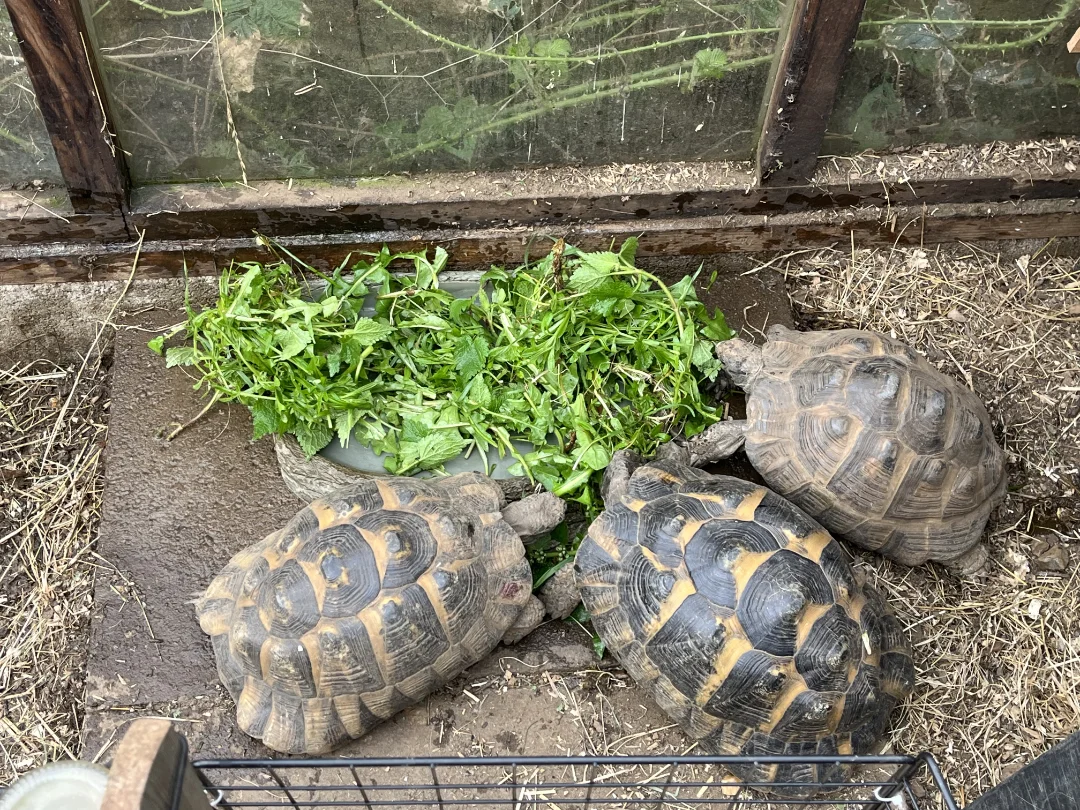
Porsche, Vicky & Clover are our fabulous spur thigh Tortoises. This species of tortoise is a small to medium-sized reptile native to the Mediterranean region, known for its distinctive thigh spurs and domed shell.
As a slow-moving survivor, this species has adapted to a variety of habitats, from scrublands to rocky hillsides, and is a beloved icon of resilience in the animal kingdom.
Spur Thigh Tortoises are diurnal (daytime active) and are most active, after they have warmed up in either the sun, or their heat lamps. Like most tortoises, they may bask in full sun, but on very hot days, they may also hide away.
Porsche and Clover have been cherished members of our household since 2005, when they joined us at the tender age of two years old. Vicky, on the other hand, arrived in 2022 after a family entrusted her to us for her safety, as their dog wasn’t fond of her company. She now thrives happily among our little tortoise herd!
Scientific Name: Testudo Graeca Ibera (TGI)
Class: Reptile
Origin: Turkey, albeit they can be found widely spread across Bulgaria, Greece, Turkey, Iran, Syria, Iraq and Jordan.
Diet: Herbivore, feeding on a variety of grasses, fruits, and vegetables.
Lifespan: Typically around 30-55 years in the wild but in captivity, they have been known to live up to 80 years old!
Interesting Fact: The Spur Thigh tortoise has a spur (bony projection) on the underside of their hind leg, hence their name.
They are a hibernating species, and we see them find a hibernating spot from the end of October through to around the middle of March.


Navigation Pros!
These tortoises are known to “hibernate” in a way that’s quite remarkable—they can dig burrows or find sheltered spots to enter a state of brumation during colder months.
What’s especially cool is that some return to the same hibernation spots annually, like a tortoise GPS!

There is no specific listing for the TGI (as there is still some confusion over the genetics of the tortoise, However, the common Greek Spur Thigh Tortoise (Testudo graeca) is listed as vulnerable.
This classification is based on threats such as habitat loss, fragmentation, overcollection for the pet trade, and illegal trafficking. The species’ wide distribution across North Africa, southern Europe, and parts of the Middle East means its status can vary by region, with some subspecies or populations facing greater risks than others.