
Boop, Our Axolotl
Boop came to live with us in October 2024, when they were approximately 12 months old. They were an unwanted pet and had sadly outgrown their tank, so we set about providing a luxury set up for Boop to live!
Axolotl’s are amphibians, but are an unusual species as the Axolotl is the paedomorphic stage of a Salamander. Paedomorphic or neotenic means juvenile form. In other words, the Axolotl spends its whole life (usually) without going through metamorphosis and reaching adulthood!
Under rare circumstances (related to hormone levels and environment), an Axolotl can undergo metamorphosis and become an ‘air breathing’ salamander that is similar in species to the fire salamander.
Initially thought to be female, the name given was Betty Boop, but Betty does actually appear to be male, so the name has been changed to Boop!
Scientific Name: Ambystoma mexicanum
Class: Amphibian
Origin: Originally found only in Lake Xochimilco, near Mexico City, which is part of an ancient lake system. They prefer cool, clean, and well-oxygenated water.
Diet: Carnivorous, eating a variety of foods in the wild like small fish, insects, and worms. In captivity, they are commonly fed bloodworms, daphnia, brine shrimp, and specially formulated pellets.
Lifespan: Typically shorter in the wild due to environmental challenges, predators, and habitat degradation, often not exceeding 5 years. Axolotls in captivity can live between 10 to 15 years, with some individuals reaching or even exceeding 20 years under excellent care!
Interesting Fact: A more intriguing fact about axolotls is their unique ability among vertebrates to regenerate not only limbs but also complex tissues such as their spinal cord, heart, and even parts of their brain.
This regeneration includes the complete restoration of lost or damaged structures, down to the cellular level, which can happen multiple times throughout their life. This capability has made them a subject of extensive scientific research, particularly in the fields of regenerative medicine and developmental biology, aiming to understand how these processes might be applied to human medicine.
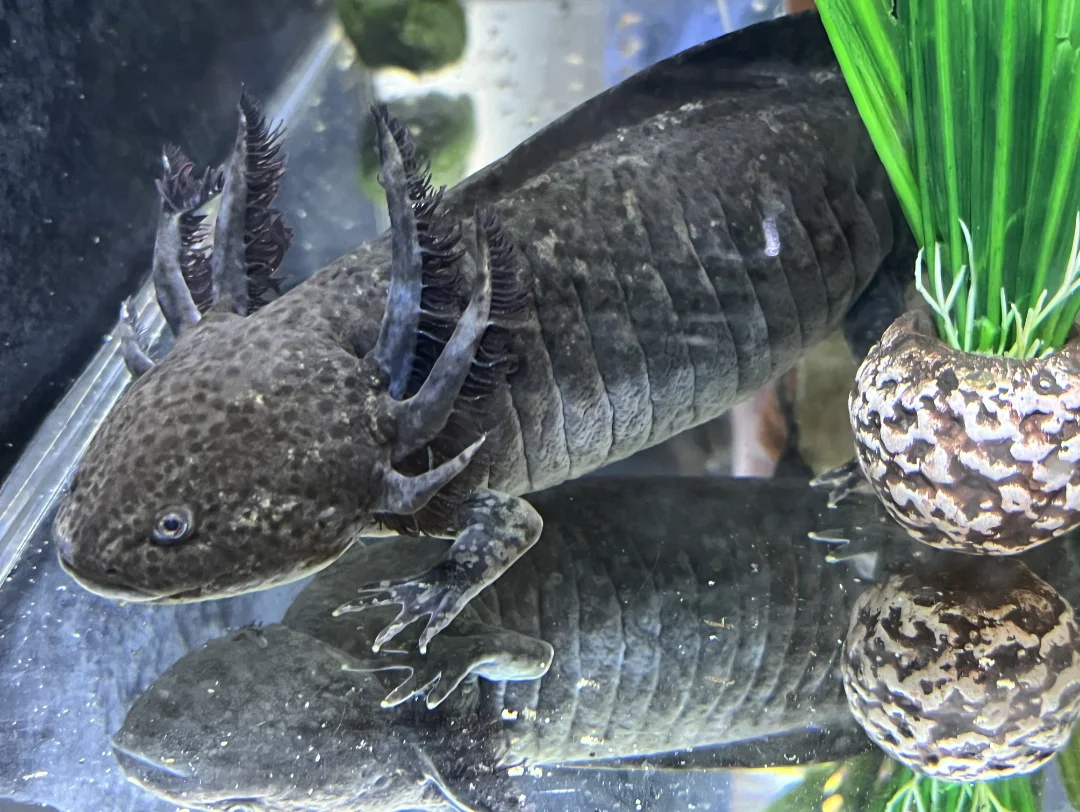
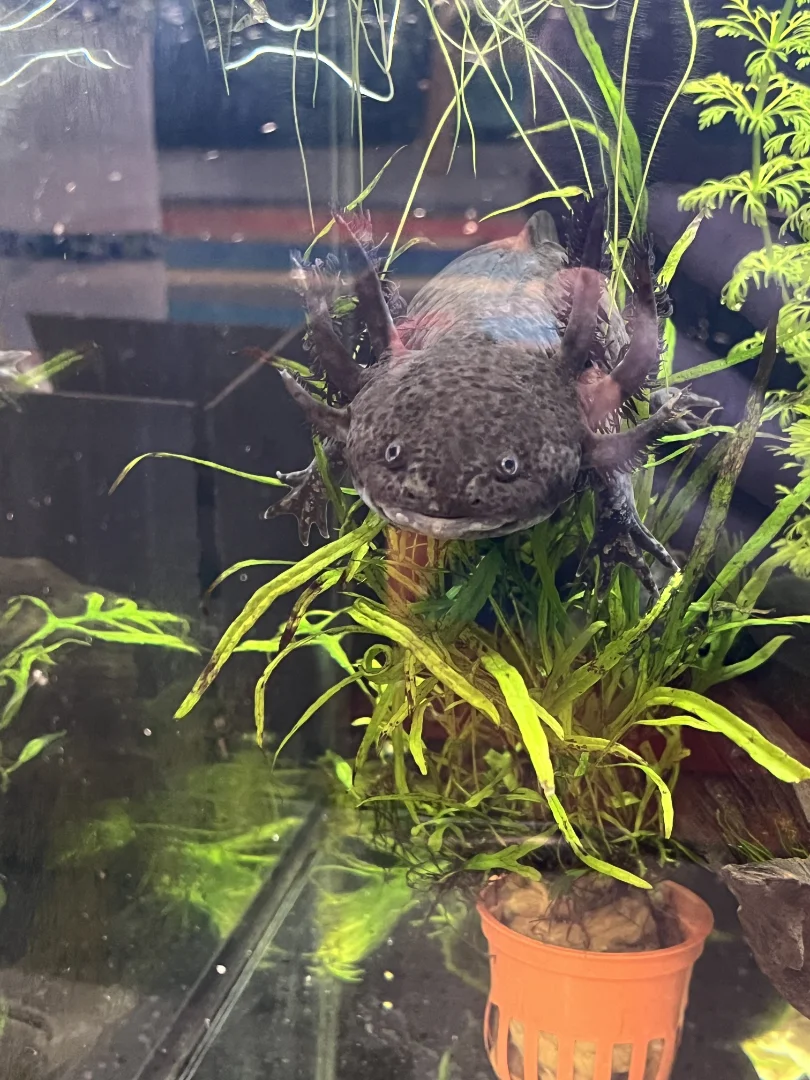
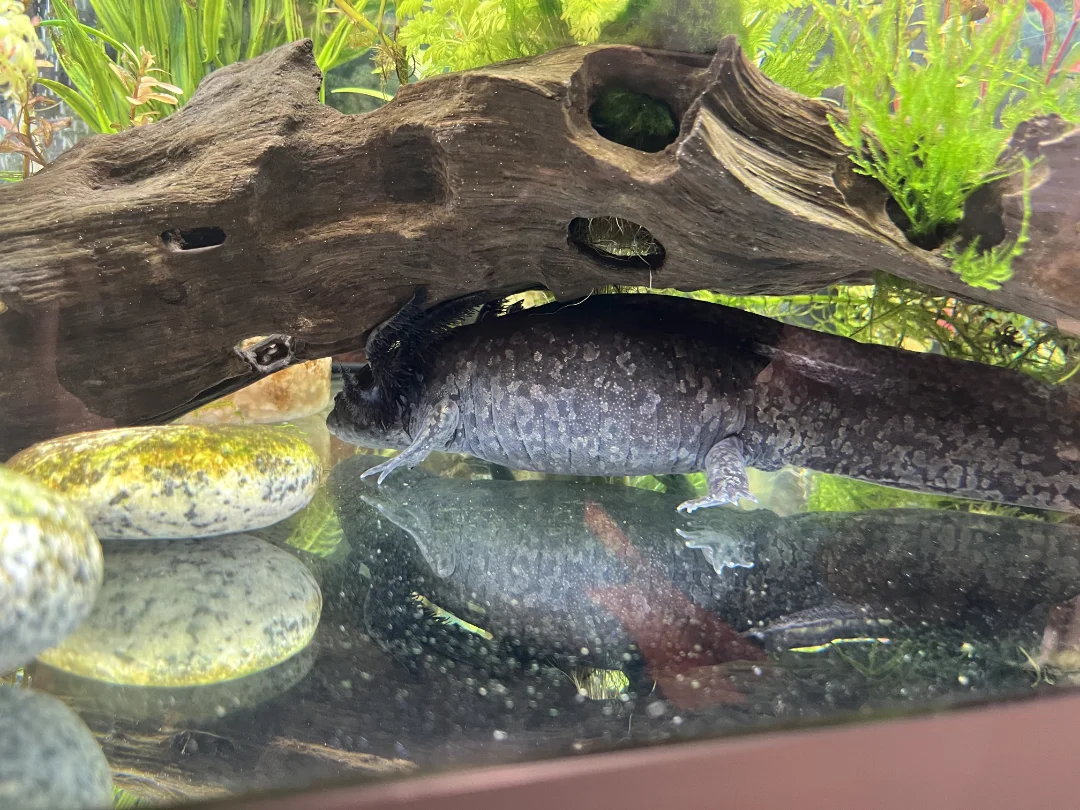

peter pan of the amphibian world
Neoteny: Unlike most amphibians that undergo metamorphosis to live on land, axolotls retain their juvenile, aquatic features throughout their adult life.
They keep their gills, finned tail, and overall larval appearance even when they reach maturity. This means they never “grow up” in the traditional sense, much like Peter Pan who never wanted to grow up.

The axolotl (Ambystoma mexicanum) is critically endangered. Its natural habitat is primarily limited to the Lake Xochimilco system in Mexico City, Mexico. Factors contributing to its endangered status include:
Habitat Loss: Urbanisation and the draining of its natural habitat for agricultural and urban development have significantly reduced the areas where axolotls can live.
Water Pollution: Pollution from agricultural runoff, sewage, and other contaminants has degraded water quality in Lake Xochimilco.
Invasive Species: Introduction of non-native fish species that prey on axolotls or compete with them for resources.
Conservation efforts are underway, including breeding programs and attempts to clean and restore parts of their habitat.