
Monty, Our Royal Python
Monty is a Royal Python, otherwise known as a Ball Python. They are classified as terrestrial snakes meaning that they prefer to slither around the ground and burrow underground as opposed to arboreal animals that prefer spending time living and hiding in trees (such as a Monkey).
Pythons are deemed to be crepuscular (active at dawn and dusk), but Monty is most active at night, after lights are out. Being crepuscular, they will access some natural sunlight and in the wild they may occasionally be seen basking.
Monty, like most Ball Pythons, is docile and non-aggressive, he is non-reactive and moves slowly when being handled. When scared, he curls up in a ball, hence the name Ball Python!
Scientific Name:
Royal Pythons are also known by their scientific name, Python Regus
Class: Reptile
Origin: They come from Africa, in places like Ghana and Togo, where they love to hide in the grass or in little holes in the ground.
Diet: Carnivore, their natural diet consists mainly of rodents like mice, rats, and sometimes small birds. They might also eat other small mammals if available.
Lifespan: Around 10 years in the wild due to predators, but in captivity, they can last around 30 years!
Interesting Fact: It is said that ancient African tribal leaders would wear the snakes around their necks like jewellery. That’s quite a big necklace, as adult Ball pythons can be up to 1.5 metres long!

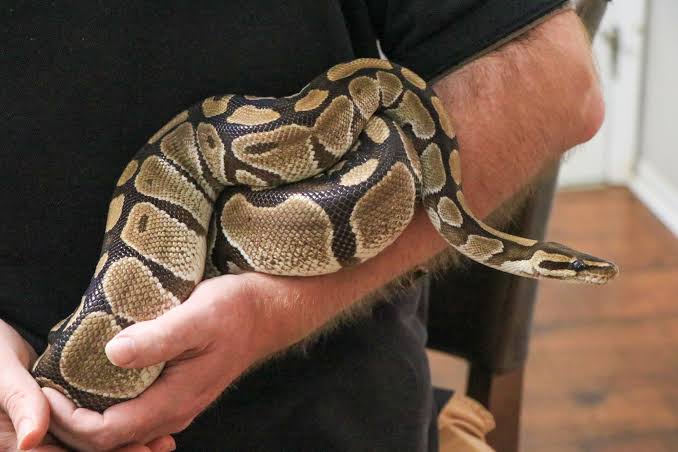


The name Ball python, which is more commonly used in American English, draws from the fact that these snakes tend to curl up in a ball when they are scared or stressed.
They are shy animals that are easily spooked.

Ball Python (Python regius) has most recently been assessed for The IUCN Red List of Threatened Species in 2020.
Whilst there has been no scientific research completed to support the near threatened category, declines have been reported in most West African range states.
Unfortunately, there are no mechanisms in place to ensure that harvesting is sustainable and no systematic monitoring, and both regulation of commercial trade and enforcement of existing restrictions on harvesting are considered inadequate. This species is consequently listed as Near Threatened based on either recent rate of decline or likely future declines.