
Kayda, Our Bearded Dragon
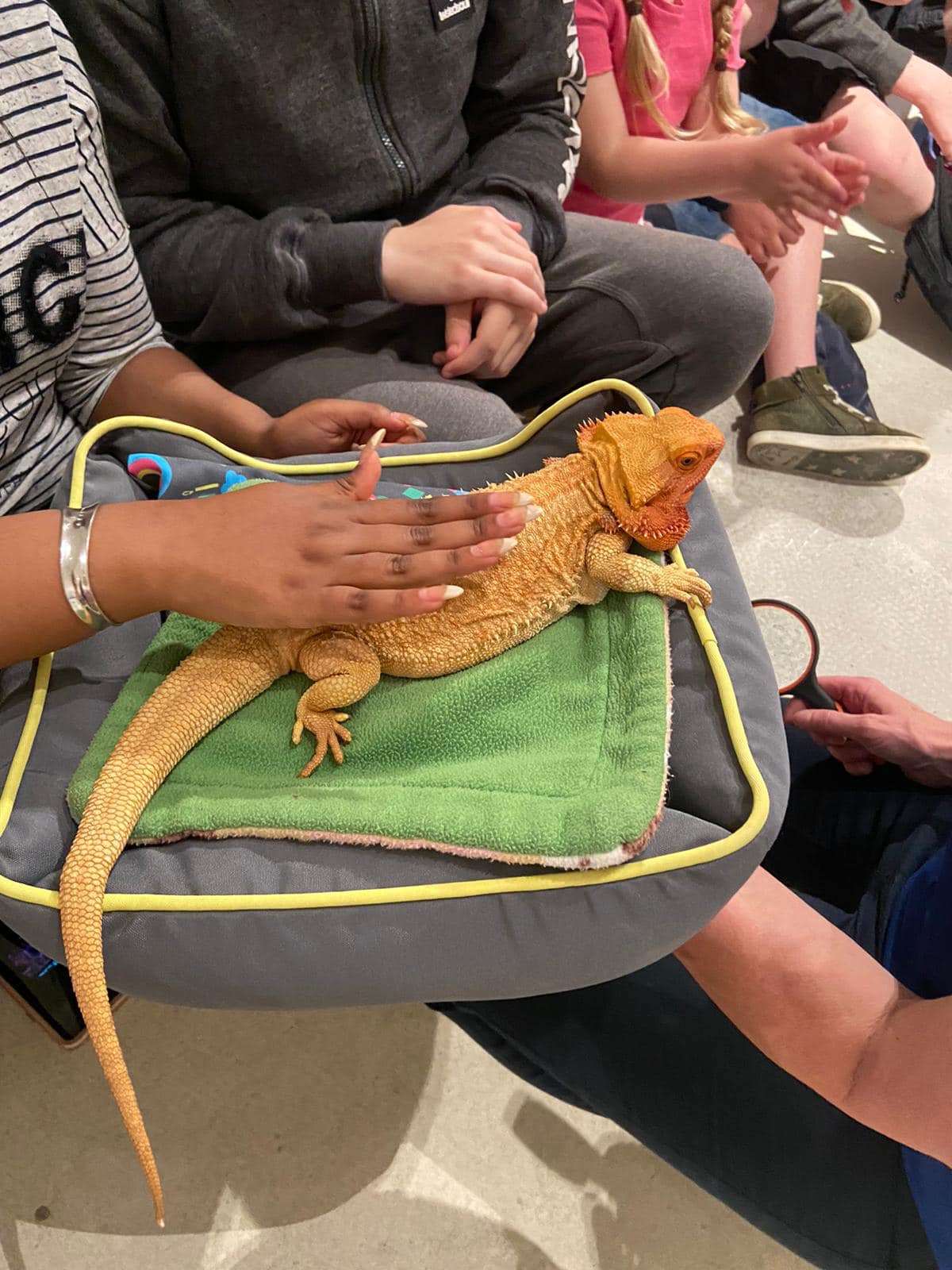
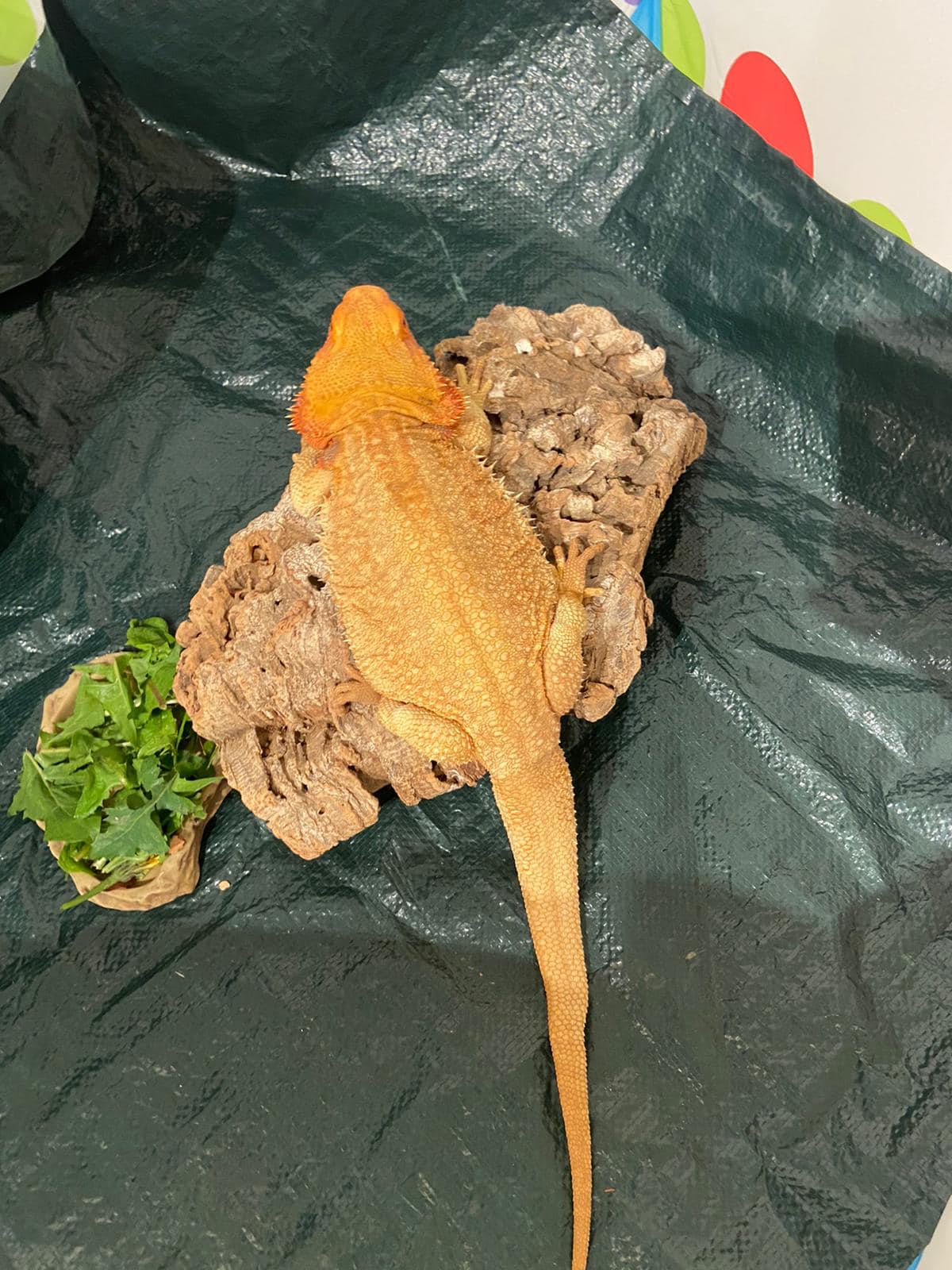
Kayda is a Central (or inland) Bearded Dragon.
After being handed over to Lynn as part of an RSPCA case, I now live in a 5 foot vivarium, with UV lighting and heating that replicates my natural environment, which would be in Australia.
I also have things to climb and hide under. I eat fresh greens daily, often picked from the wild – I love dandelion! I also get to eat bugs such as locusts and crickets.
Scientific Name:
Bearded dragons are also known by their scientific genus name, Pogona, or specifically for the Inland Bearded Dragon (like Kayda), Pogona vitticeps, and by their colloquial name, “beardies.”
Class: Reptile
Origin: Native to eastern and central Australia where it would live in desert, dry scrubland and dry forest areas,
Diet: Omnivore, eating salad, green leafy vegetables and a range of insects (grass hoppers, crickets, cockroaches)
Lifespan: up to 12 years (in captivity)
Interesting Fact: Bearded Dragons have a ‘third eye’ called the ‘Pineal Eye’. This third eye sits on top of the head and points upwards. It cannot see fully like normal eyes but detects changes in light and shadow and helps to detect shadows in the sky formed by birds of prey.

Bearded dragons get their name from the spiny projections under their necks that resemble a man’s beard.
When they feel threatened or excited, they puff out their beards and open their mouths to make themselves look bigger!

Conservation Status

Bearded dragons (Pogona vitticeps) is classified as Least Concern which means that these beardies are not currently considered at risk of extinction. Despite their popularity in the pet trade, their population in the wild is stable, and there are no major threats to their survival.
However, it’s worth noting that some subspecies might be at greater risk, and conservation efforts are still important to protect their natural habitats.